
UNDERSTANDING
PFAS
PFAS stands for per- and polyfluoroalkyl substances. They are a large group of man-made chemicals that have been used for decades in products that resist water, grease, stains, and heat. Because they do not break down easily, PFAS are often called “forever chemicals.” They can build up in the environment over time and may also build up in the human body.
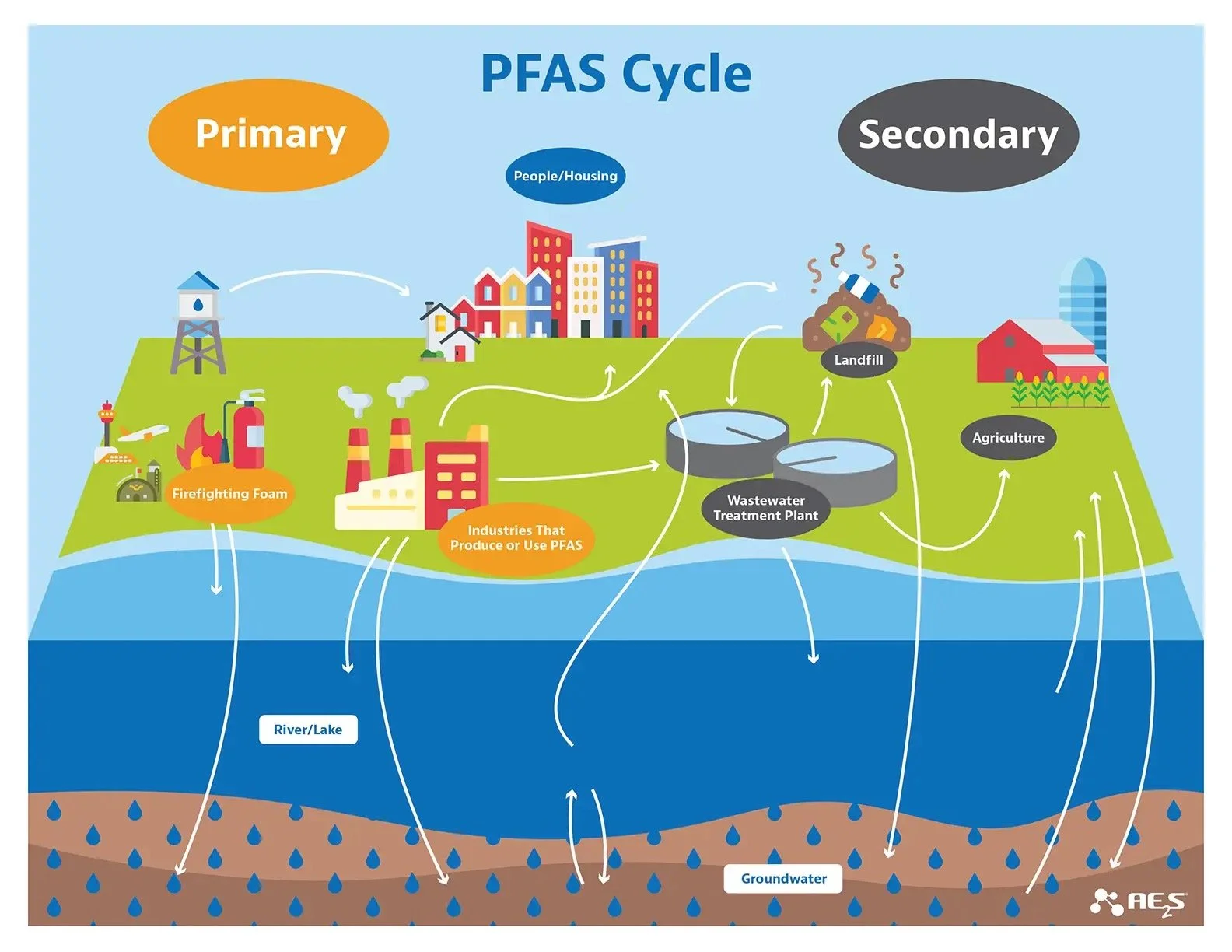
Why are PFAS found in water?PFAS have been used in industrial processes and in many everyday products, including some nonstick, stain-resistant, and water-resistant materials. Over time, PFAS can enter soil and water through manufacturing, waste disposal, firefighting foam, landfill runoff, and other sources. Once they get into groundwater or surface water, they can be difficult to remove.
Why is PFAS a concern?Scientific studies suggest that exposure to some PFAS may be linked to harmful health effects. Research is still ongoing, but public health agencies have identified concerns including possible effects on cholesterol, liver enzymes, immune response, pregnancy, infant development, and increased risk of certain cancers for some PFAS. Because these chemicals can persist for a long time, even low-level exposure over many years is a concern.
Why should PFAS be filtered from drinking water?
Water is something you and your family use every day. If PFAS are present, regular exposure through drinking, cooking, ice, coffee, and formula mixing can add up over time. Filtering PFAS from drinking water is a practical way to reduce one of the most direct and consistent exposure pathways inside the home.
What is the EPA doing about PFAS in drinking water?
The EPA has established drinking water standards for several PFAS, including PFOA and PFOS, and also regulates several other PFAS individually or in mixtures under the federal drinking water rule. These standards reflect how seriously PFAS contamination is now being treated at the national level.
How we help
At Preserve Water, we help homeowners understand what is in their water and choose treatment options that make sense for their home, health goals, and budget. If you are concerned about PFAS, we can help you:
understand your local water concerns
review available water test results
choose a filtration system designed to reduce PFAS
make sure the solution fits your home and water usage